
Summer 2026 Travel Charging Revolution: How Qi2.2 25W Magnetic Charging Is Reshaping On-the-Go Power
Executive Summary: As the summer 2026 travel season approaches, a fundamental shift is transforming how we power our devices on the road. The newly finalized Qi2.2 standard with its 25W magnetic wireless charging capability has reached a critical inflection point—over 500 certified products now populate the market, creating an ecosystem where magnetic wireless charging is no longer a premium feature but an essential travel companion.
This comprehensive guide examines how Qi2.2 magnetic charging is revolutionizing travel power, from airport lounges to remote campsites, and why the traditional "cable chaos" paradigm is rapidly becoming obsolete for modern travelers.
Quick Navigation
- 1 The Qi2.2 Revolution: What Changed for Travelers
- 2 Airport Charging Transformed: The 25W Advantage
- 3 Magnetic Power Banks: The New Travel Essential
- 4 Multi-Device Travel Charging Strategies
- 5 Safety and Reliability: The Business Traveler Priority
- 6 Product Selection Guide: 2026 Standards
- 7 Core Q&A: Travel Charging Decoded
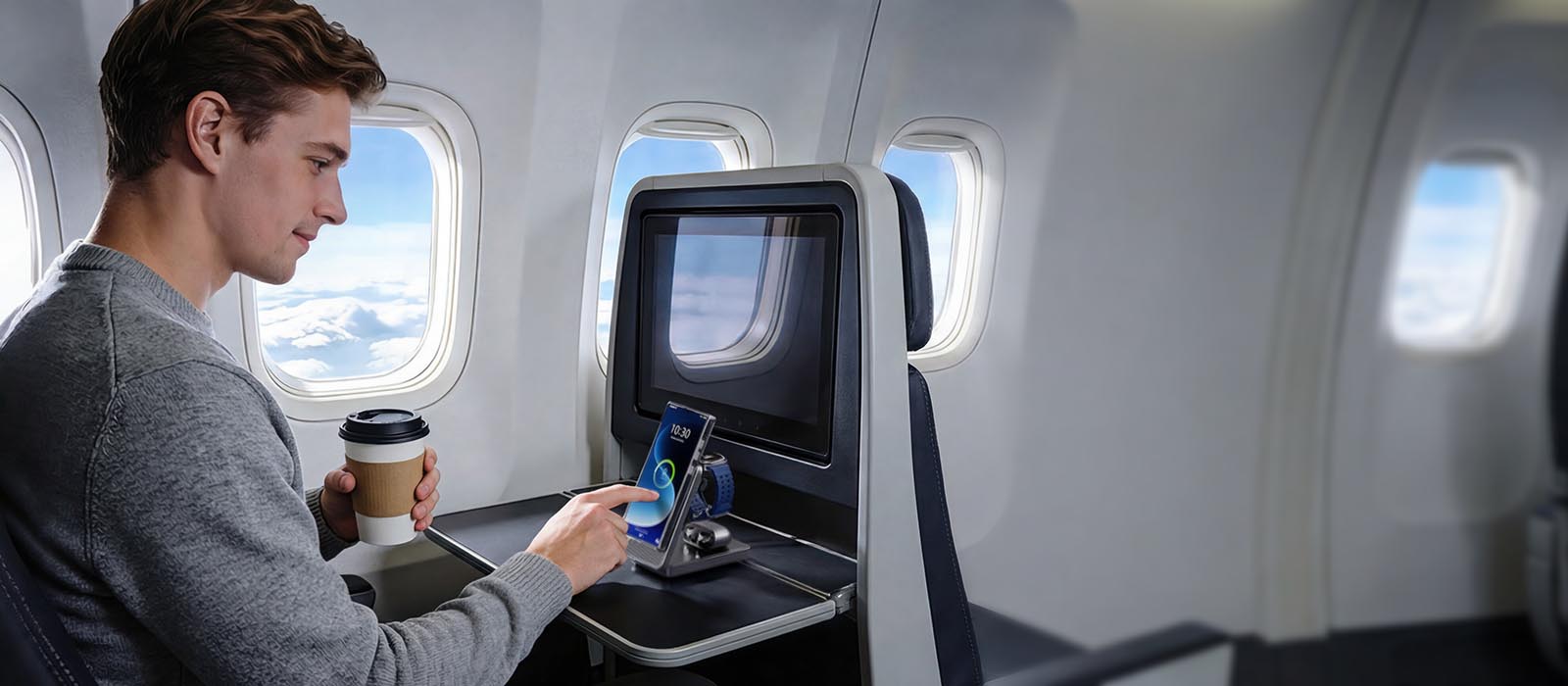
Foldable magnetic wireless chargers have become the cornerstone of modern travel power solutions, combining portability with high-speed Qi2.2 25W charging
1. The Qi2.2 Revolution: What Changed for Travelers
1.1 From Fragmentation to Standardization
When the Wireless Power Consortium (WPC) finalized the Qi2.2 specification in early 2026, it marked the culmination of a years-long effort to unify the fragmented magnetic wireless charging landscape. Building upon Apple's MagSafe technology incorporated into the Qi2 standard, Qi2.2 pushes the power ceiling to 25W while maintaining full backward compatibility with existing Qi2 (15W) and Qi (5-7.5W) devices.
Why this matters for travelers:
- Universal compatibility: A single magnetic charger now works seamlessly with iPhone, Samsung Galaxy, Google Pixel, and other Qi2-certified devices
- Faster charging speeds: 25W output matches or exceeds many wired fast chargers, eliminating the "wireless is slower" perception
- Magnetic alignment guarantee: The MPP (Magnetic Power Profile) ensures perfect coil alignment every time—no more "charging slowly" due to misalignment on bumpy flights
1.2 The 500+ Certification Milestone
By May 2026, the Qi2 ecosystem has reached a critical mass with over 500 certified products spanning power banks, travel chargers, car mounts, and multi-device stations. This proliferation means travelers can now build a complete magnetic charging ecosystem from a single brand or mix-and-match certified products with confidence.
Market Impact
The certification milestone has driven prices down by approximately 40% compared to 2024 levels, making Qi2.2 magnetic charging accessible to mainstream travelers rather than just early adopters. Premium foldable magnetic power banks now retail in the $40-60 range, down from $80-120 in the previous generation.
2. Airport Charging Transformed: The 25W Advantage
2.1 The Airport Power Challenge
Airports represent one of the most challenging charging environments for travelers. Between limited power outlet availability, questionable public USB port security, and the constant need to stay mobile, traditional charging solutions often fall short. The 25W Qi2.2 standard addresses these pain points directly:
| Scenario | Traditional Solution | Qi2.2 Magnetic Solution |
|---|---|---|
| Gate area (limited outlets) | Fight for outlet, tethered to wall | Magnetic power bank, stay mobile |
| In-flight charging | Wired connection, cable mess | Magnetic attachment, clean setup |
| Security checkpoint | Disconnect cables, repack | Quick magnetic snap-off |
| Multiple devices | Multiple cables, tangled mess | Multi-device magnetic station |

Airport charging transformed: magnetic power banks eliminate the need to compete for limited power outlets while keeping travelers mobile
2.2 Charging Speed Comparison: Airport Reality
The practical difference between Qi2.2 25W and older wireless charging standards becomes stark in time-constrained airport scenarios:
| Device | Qi (7.5W) 30 min | Qi2 (15W) 30 min | Qi2.2 (25W) 30 min |
|---|---|---|---|
| iPhone 17 Pro | ~18% charge | ~35% charge | ~50% charge |
| Samsung Galaxy S26 | ~15% charge | ~30% charge | ~45% charge |
| Google Pixel 10 Pro | ~16% charge | ~32% charge | ~48% charge |
Real-World Impact
A 30-minute layover that previously yielded only 15-20% charge with standard Qi wireless can now deliver 45-50% charge with Qi2.2—enough to power through a 3-hour flight with active use. This transforms the airport charging experience from "desperate scramble" to "brief top-up."
3. Magnetic Power Banks: The New Travel Essential
3.1 Evolution of the Portable Charger
The power bank has undergone a fundamental transformation with Qi2 magnetic integration. No longer just a battery with USB ports, modern magnetic power banks serve as complete wireless charging stations in pocket-sized form factors:
Key innovations in 2026 magnetic power banks:
- Foldable stands: Integrated kickstands transform the power bank into a hands-free viewing stand during charging
- Hybrid charging: Simultaneous wireless (magnetic) and wired output for multi-device scenarios
- Smart displays: TFT screens showing real-time power, voltage, and temperature monitoring
- Compact profiles: 5000-10000mAh capacities in ultra-slim designs under 12mm thickness
3.2 Samsung's Qi2 Magnetic Power Bank: A Case Study
Samsung's 5000mAh Qi2 magnetic power bank exemplifies the new generation of travel-focused portable chargers:
- Wireless output: 15W Qi2 magnetic charging
- Wired output: Up to 25W via USB-C with PPS support
- Design: Built-in folding aluminum stand for hands-free viewing
- Capacity: 4855mAh rated, with smart power management for optimal efficiency
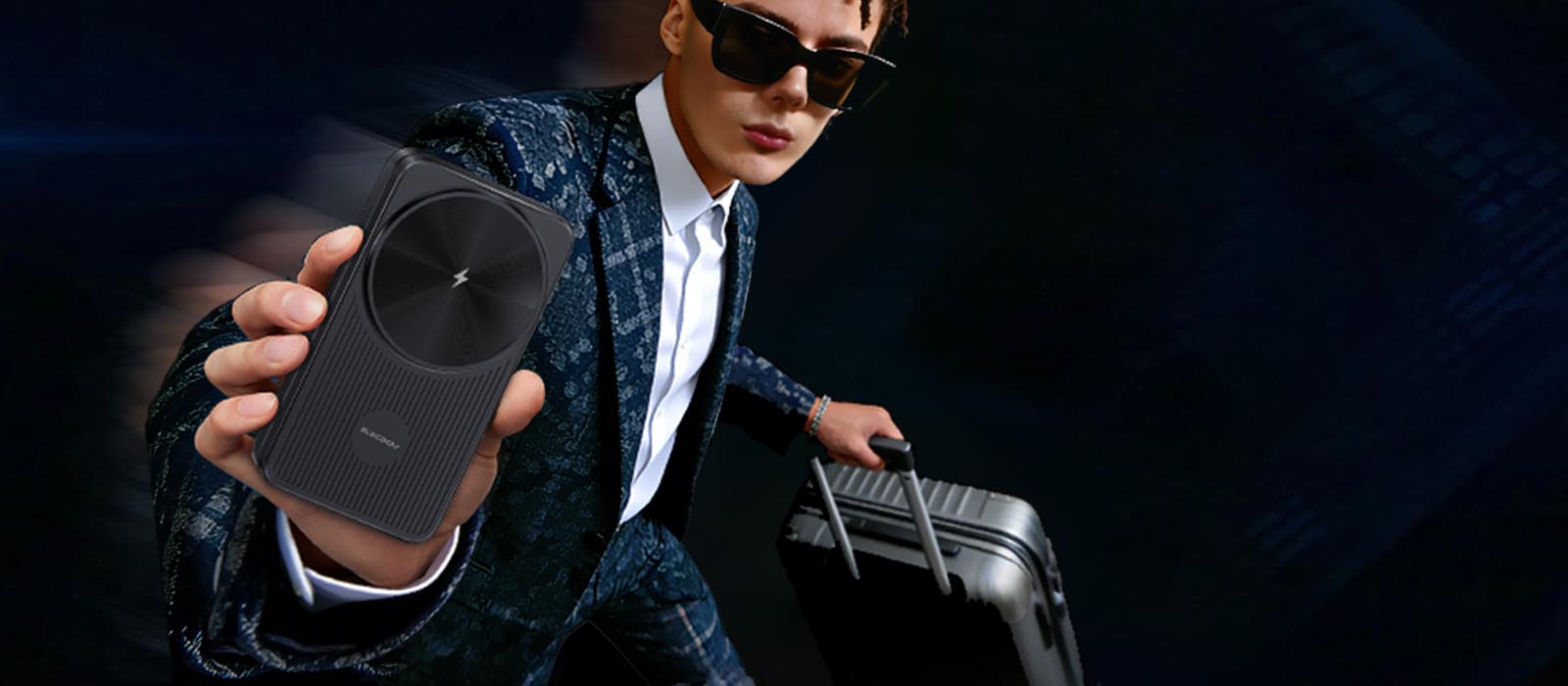
Modern magnetic power banks combine wireless and wired charging capabilities with foldable designs optimized for travel
3.3 Choosing the Right Capacity
| Capacity | Use Case | Device Charges | Weight |
|---|---|---|---|
| 5000mAh | Short trips, daily commute | ~1 full phone charge | ~100g |
| 10000mAh | Weekend trips, heavy users | ~2-2.5 phone charges | ~180g |
| 20000mAh | Long flights, multi-device users | ~4-5 phone charges | ~350g |
| 26500mAh+ | Laptop charging, extended travel | ~1 laptop + 2 phones | ~500g+ |
For most travelers, the 10000mAh magnetic power bank represents the optimal balance between capacity and portability—sufficient for a full day of heavy use while remaining pocket-friendly.
4. Multi-Device Travel Charging Strategies
4.1 The Modern Travel Device Arsenal
Today's traveler typically carries 3-5 devices requiring regular charging: smartphone, smartwatch, earbuds, tablet, and often a laptop. Traditional charging approaches—one cable per device—create a logistical nightmare in hotel rooms and airport lounges. Qi2.2 magnetic charging offers elegant solutions:
The 3-in-1 Magnetic Station Strategy:
- Primary device (phone): Magnetic wireless charging at 15-25W
- Secondary devices (watch + earbuds): Dedicated charging spots on the same station
- Laptop: Wired USB-C PD from the station's pass-through charging port
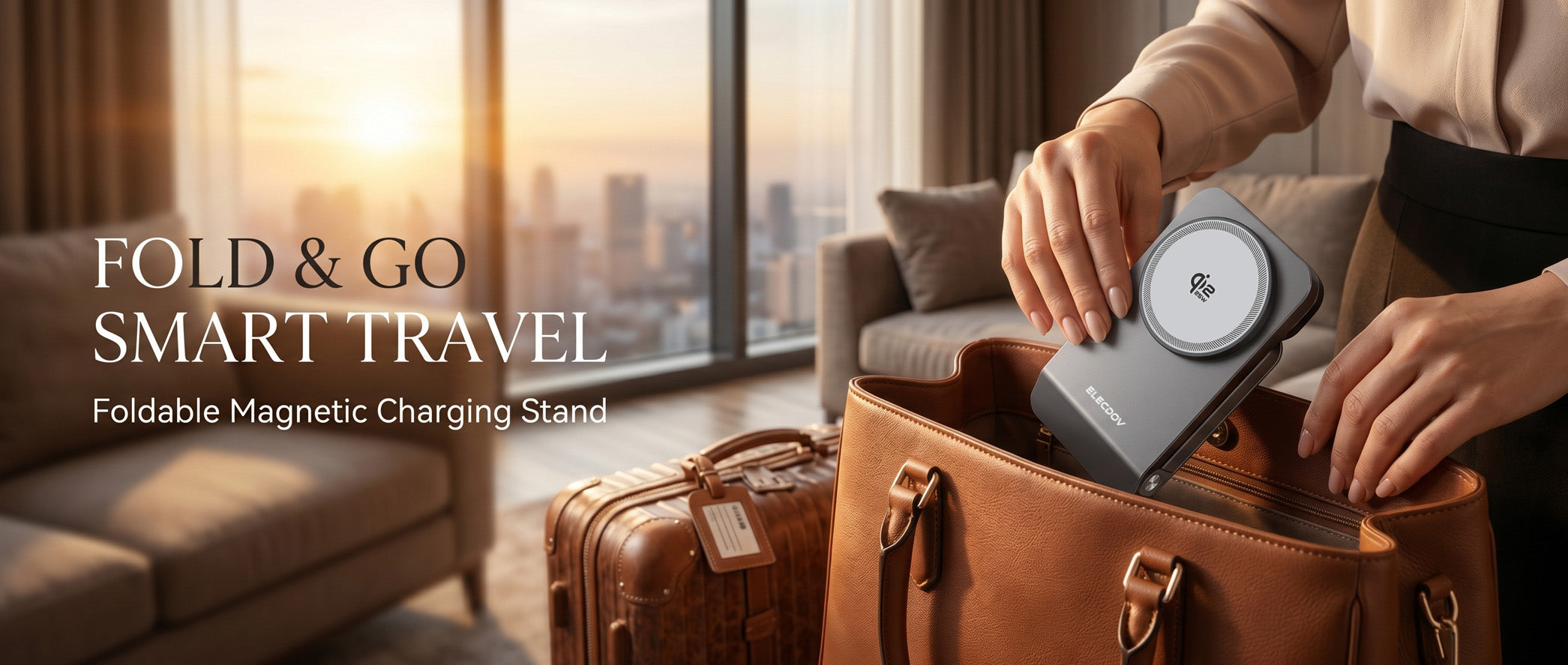
Foldable 3-in-1 magnetic charging stations provide complete power solutions in compact, travel-ready form factors
4.2 Hotel Room Charging Optimization
Hotel rooms often present charging challenges: limited outlets, poorly placed power strips, and the need to keep devices accessible. A magnetic 3-in-1 charging station solves these problems:
Hotel Charging Setup (2-minute deployment)
- Plug the station's single USB-C cable into any available outlet or USB port
- Place phone on magnetic charging pad (instant alignment)
- Set watch on dedicated charging cradle
- Place earbuds case on secondary charging spot
- All devices charging simultaneously from one outlet
Result: Complete nightstand charging solution occupying one outlet, with all devices visible and accessible.
4.3 The Carry-On Charging Kit
For the prepared traveler, a well-organized charging kit is essential. The 2026 Qi2.2 ecosystem enables a remarkably streamlined approach:
- 1× Foldable 3-in-1 magnetic station (hotel, office, extended stays)
- 1× 10000mAh magnetic power bank (daily carry, airport, transit)
- 1× 65W GaN USB-C charger (laptop charging, powering the station)
- 1× USB-C to USB-C cable (high-power connection)
- 1× Magnetic car mount (rental cars, road trips)
Weight Comparison
Traditional multi-cable kit: ~650g with 5 cables + charger
Qi2.2 magnetic kit: ~420g total
Savings: 35% lighter, 60% fewer cables
5. Safety and Reliability: The Business Traveler Priority
5.1 The Public USB Port Risk
For business travelers handling sensitive data, public USB charging stations pose a genuine security threat. "Juice jacking"—the practice of extracting data from devices connected to compromised charging ports—remains a concern at airports, hotels, and conference venues. Qi2.2 wireless charging provides a fundamentally safer alternative:
- No data connection: Wireless charging transmits only power, not data
- Physical isolation: No cable insertion required, eliminating the attack vector
- Certified safety: Qi2.2 certified chargers meet rigorous electromagnetic and thermal safety standards
5.2 Device Protection Features
Modern Qi2.2 magnetic chargers incorporate multiple protection layers:
| Protection Feature | Function | Benefit |
|---|---|---|
| Foreign Object Detection (FOD) | Detects metal objects on charging surface | Prevents overheating, fire risk |
| Temperature Monitoring | Real-time thermal sensing | Adjusts power to prevent damage |
| Over-voltage Protection | Limits voltage output | Protects device battery health |
| Over-current Protection | Prevents excessive current draw | Extends device lifespan |
| Magnetic Alignment Verification | Confirms proper positioning | Ensures efficient charging |
5.3 The 2026 Safety Standards
New regulations implemented in 2026 mandate enhanced safety certifications for travel charging products. When selecting Qi2.2 magnetic chargers for travel, verify compliance with:
- Qi2.2 certification: WPC official certification for guaranteed compatibility and safety
- CE/FCC certification: Regional safety compliance
- UN38.3: Safe transport certification for lithium batteries (required for air travel)
- IEC 62368-1: Audio/video and information technology equipment safety
6. Product Selection Guide: 2026 Standards
6.1 Evaluating Magnetic Travel Chargers
When selecting a Qi2.2 magnetic travel charger, prioritize these specifications:
| Specification | Recommended Minimum | Premium Target |
|---|---|---|
| Wireless Output | 15W (Qi2) | 25W (Qi2.2) |
| Magnetic Strength | Standard MPP | Enhanced magnets |
| Form Factor | Foldable | Ultra-slim foldable |
| Multi-Device Support | 2 devices | 3+ devices |
| Wired Output | 20W USB-C | 45W+ USB-C PD |
| Weight | <200g | <150g |
6.2 Red Flags to Avoid
- Unverified Qi2 claims: Check for official WPC certification at qi-wpc.com
- Excessive weight claims: Genuine 10000mAh batteries weigh 180g+; "10000mAh" at 100g is fraudulent
- No safety certifications: CE, FCC, and Qi2 marks should be verifiable
- Single-device limitation: Modern travel chargers should support at least 2 devices

Multi-device magnetic charging stations enable simultaneous power delivery for phone, watch, and earbuds in a single compact unit
7. Core Q&A: Travel Charging Decoded
Frequently Asked Questions
Q1: Is Qi2.2 25W charging significantly faster than Qi2 15W for travel use?
Yes. In practical airport scenarios, Qi2.2 delivers approximately 50% more charge in the same 30-minute window. For iPhone 17 Pro: 50% vs 35%. This difference transforms a "partial charge" into a "nearly full battery" during a typical layover.
Q2: Can I use my iPhone MagSafe charger with Samsung Galaxy S26?
With Qi2 certification, yes. The Samsung Galaxy S26 series supports Qi2 magnetic charging, making it compatible with Apple MagSafe chargers and all Qi2-certified magnetic products. However, Samsung's own magnetic accessories may offer optimized charging profiles.
Q3: Are magnetic power banks allowed on airplanes?
Yes, with limitations. Power banks under 100Wh (approximately 27,000mAh at 3.7V) are permitted in carry-on luggage. Most magnetic power banks fall well under this threshold. Always pack power banks in carry-on, not checked luggage, due to fire safety regulations.
Q4: Do I need a special case for Qi2 magnetic charging?
It depends on your phone. iPhone 17 series and newer Samsung Galaxy models have integrated magnetic arrays. For other phones, a magnetic case or magnetic ring attachment enables compatibility with Qi2 magnetic chargers.
Q5: What's the minimum capacity for a travel power bank?
For short trips and daily carry, 5000-10000mAh is sufficient. For international flights and multi-day travel, consider 20000mAh or larger. Remember that wireless charging is less efficient than wired—you'll get approximately 70% of the rated capacity delivered to your device.
Q6: How do I verify a product is truly Qi2.2 certified?
Visit the official WPC certification database at qi-wpc.com/products. Search by brand or model number. Legitimate Qi2.2 products will display the certification mark and list their certified power profiles (MPP at 15W or 25W).
Conclusion
The summer 2026 travel season marks a watershed moment for on-the-go power. Qi2.2 25W magnetic charging has matured from an early-adopter novelty into an essential travel infrastructure. With over 500 certified products, competitive pricing, and universal compatibility across major smartphone brands, there has never been a better time to upgrade your travel charging setup.
For the modern traveler, the choice is clear: magnetic wireless charging eliminates cable clutter, enhances safety at public charging stations, and delivers the power speeds necessary to stay productive during transit. The question is no longer "should I adopt magnetic charging?" but rather "which Qi2.2 products best fit my travel style?"
Related Articles
- Smallest and Lightest Power Banks 2026: Qi2 Magnetic Charging for Every Trip — Compact magnetic power banks optimized for minimal travel footprints
- Qi2.2 on the Road: How 25W Magnetic Charging Became the 2026 Business Travel Essential — Business traveler strategies for maximizing Qi2.2 productivity
- Summer 2026 Travel Charging Guide: Complete Qi2.2 Ecosystem — Comprehensive travel charging strategies across all use cases
- New Standards, New Confidence: How 2026 Safety Regulations Are Transforming Travel Wireless Charging — Safety certifications and compliance requirements explained
- Stable Partner for the Rugged Road: Magnetic Car Mounts — In-vehicle magnetic charging solutions for road trips
- Professional-Level Protection Guide: Public USB Port Security Risks — Why wireless charging is safer for business travelers

Elecdov Technical Team
Retail, Wholesale, Customization, After‑sales, Repair, Joint Cooperation, One‑stop Service
Looking for the perfect travel charging solution?
Our Qi2.2 certified magnetic chargers are designed for the modern traveler. Explore our travel-ready collection.
Shop Travel Chargers


